


Guide 03
Kombucha for beginners
Sweet tea becomes bright, tart and softly sparkling with time. The secret is not mystique — it is clean tools and enough starter liquid.
[Tea | Sugar | SCOBY | Starter liquid]
01
What is kombucha?
Kombucha is sweetened tea fermented with starter liquid and a SCOBY — a symbiotic culture of bacteria and yeast. During fermentation, a new pale layer may form across the surface while the drink becomes more acidic.
The sugar is food for the culture, not simply sweetness for you. Most of it is consumed during fermentation, which is why a finished batch tastes tart rather than syrupy.
Research does not support treating kombucha as a cure-all. Enjoy it for its bright flavour and the pleasure of tending a traditional ferment. Home-brewed kombucha can contain small, variable amounts of alcohol.
02
Your simple first batch
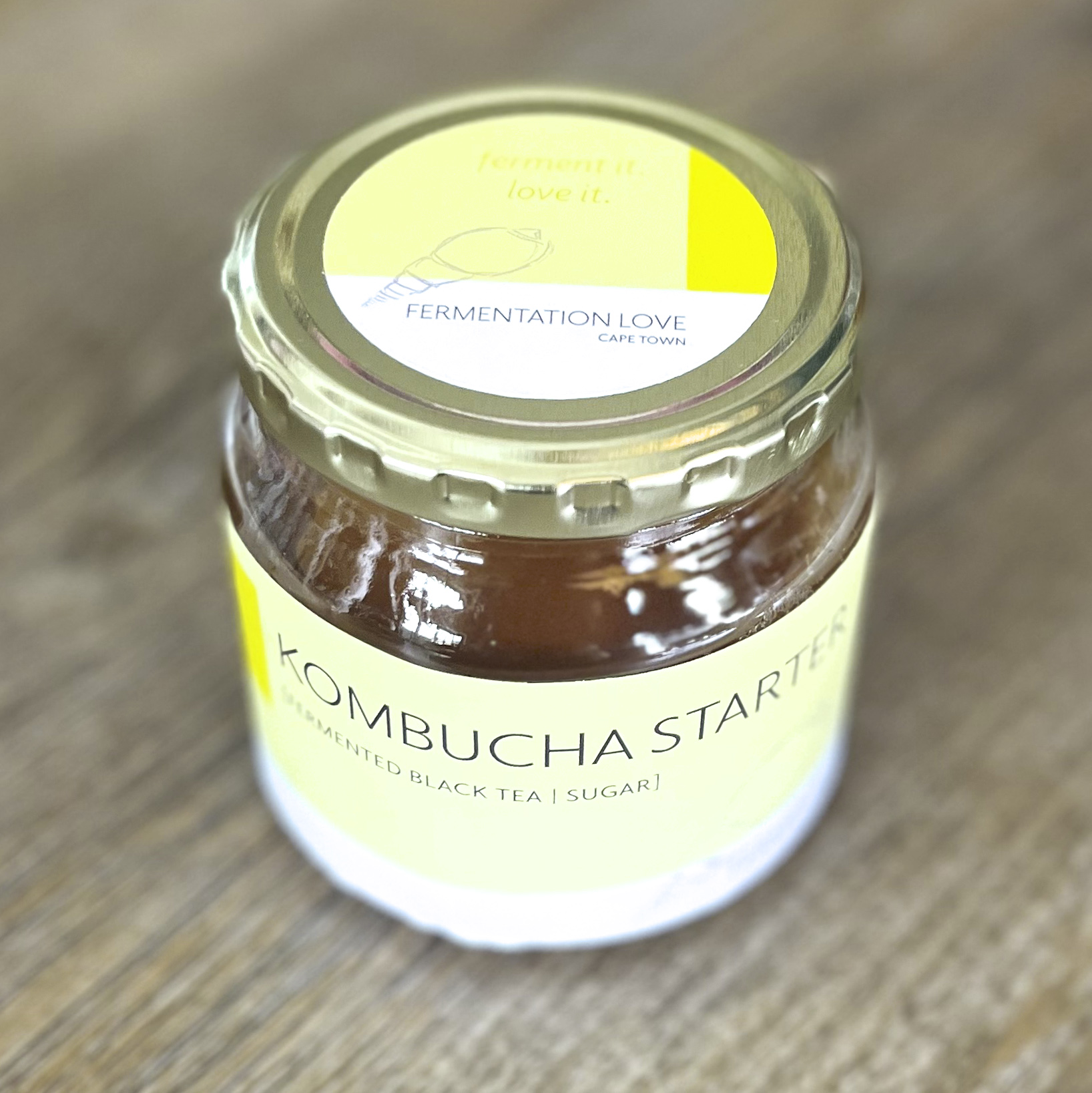
The starter liquid that arrives with your SCOBY is essential. It acidifies the batch from the beginning and contains most microorganisms that are needed for the fermentation.
Use the following quantities and feeding rhythm. Clean tools, fully dissolved sugar and fresh water give the culture a steady start.
Ingredients:
1 kombucha SCOBY
150-200 ml starter liquid
1.3 l mineral water
12 g black or green tea
100 g sugar
- 01Brew sweetened black or green tea, then allow it to cool completely.
- 02Pour into a clean glass vessel. Add all the starter liquid and the SCOBY.
- 03Cover with a tightly woven clean cloth and secure it. Keep the vessel away from direct sun.
- 04Begin checking flavour around day seven. It should move from sweet tea towards a clean, pleasantly tart balance.
- 05Reserve enough mature kombucha as starter for the next batch — we recommend using at least 10% starter liquid for your next kombucha brew.
- 06Bottle and refrigerate the rest of the kombucha. For optional flavouring and extra fizz, leave the bottled kombucha for a second ferment at room temperature for 2-4 days.
03
Bottle with care
Sealed bottles can build substantial pressure, especially with fruit or extra sugar. Use pressure-safe bottles, leave some headspace, refrigerate before opening and point the bottle away from faces.
A SCOBY can float, sink or sit sideways. Its position is not a measure of health. Clean acidity, the absence of mould and a reliable care routine matter more.
Use glass, food-grade plastic or stainless steel only. Kombucha is acidic and can draw metals out of ceramic glazes, crystal or unsuitable containers.
04
Flavour and second ferment
Flavour after the first ferment, not during it. Strain off the SCOBY, add fruit, juice, ginger or herbs, then seal briefly at room temperature for carbonation before chilling.
Taste as you go. A batch left too long simply becomes vinegary — still useful for dressings, even when it is too sharp to drink.
What the research records
Recorded benefits
Fermented foods are studied, and some effects are well recorded while others are still early or inconsistent. Nothing here is a treatment or a promise, and none of it replaces advice from a qualified health professional.
- Live microbes and tea polyphenols
- Kombucha carries live bacteria and yeasts along with the polyphenols and small amount of caffeine from the tea it is brewed from. Both are recorded reliably; their effects in the body are less settled.
- Organic acids from fermentation
- Fermentation produces acetic and gluconic acids, which give kombucha its tartness and help protect the batch itself from spoilage.
- A lower-sugar alternative to soft drinks
- Most of the added sugar is consumed by the culture, so a finished kombucha is far less sweet than the tea it started as — the clearest practical benefit for everyday drinking.
- What is still uncertain
- Claims about detoxification, immunity, cancer and liver health are not supported by good human evidence; most studies are laboratory or animal work. Home-brewed kombucha is acidic, mildly caffeinated and can contain traces of alcohol, so it is not recommended for children, pregnancy or people who are immunocompromised without medical advice.
Read the culture
What to notice
Usually normal
- — A clean tart, vinegary or tea-like aroma
- — A new cream-coloured film forming on top
- — Brown yeast strings beneath the surface
- — Gentle fizz and a gradual move from sweet to tart
Stop and discard
- — Dry, fuzzy blue, green, black or white mould
- — A rotten or putrid smell rather than clean acidity
- — A batch that does not acidify as directed in the supplied guide
Further reading
This guide is educational, not medical advice. It draws on public food-safety and university extension guidance:
Ready when you are