


Guide 02
Milk kefir for beginners
Creamy, tart and pleasantly old-fashioned. Milk kefir asks for fresh milk, a clean jar and a simple, regular rhythm.
[Milk kefir grains | Fresh milk | Time]
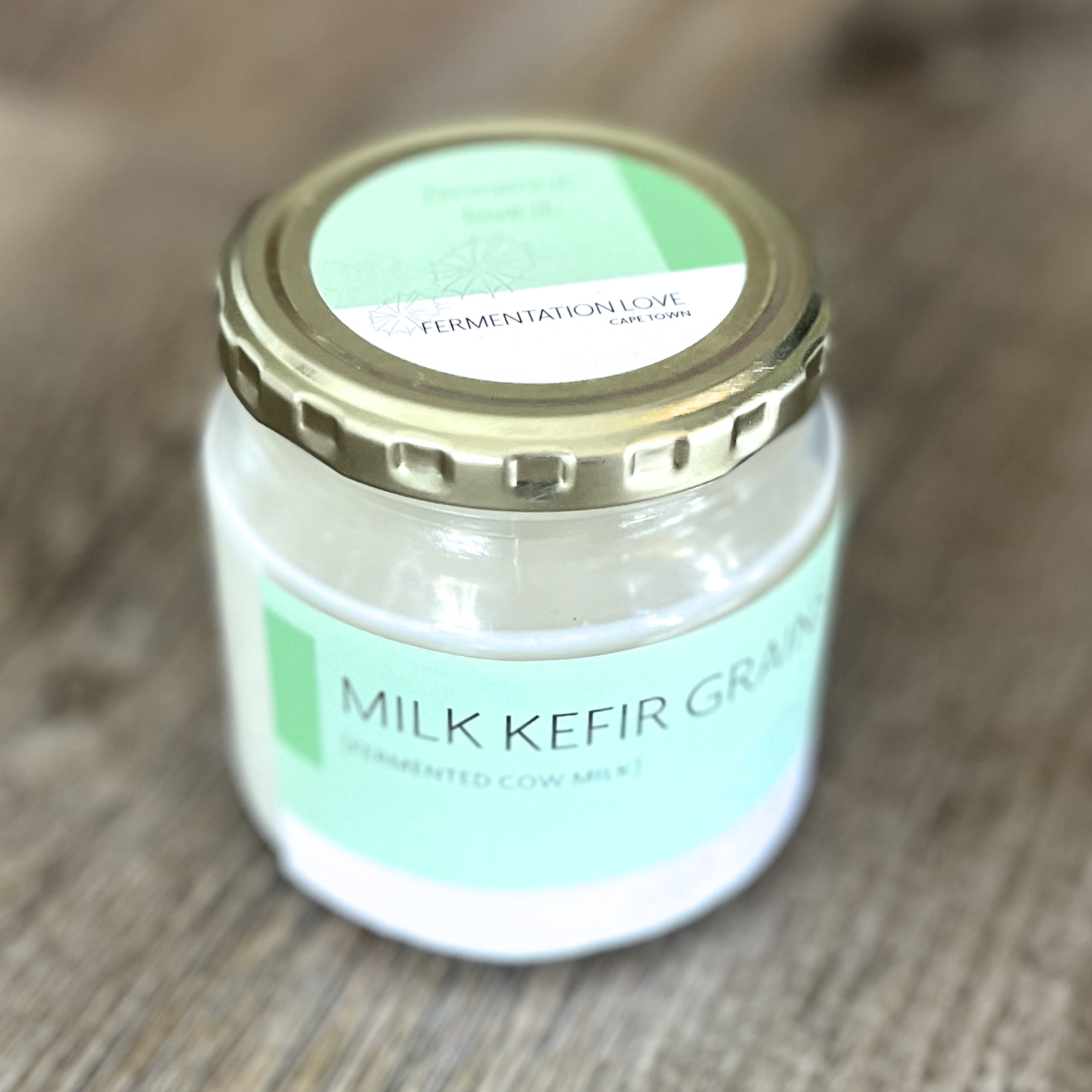
01
What is milk kefir?
Milk kefir is a cultured dairy drink made with reusable kefir grains — a living community of bacteria and yeast bound in soft, cauliflower-like clusters. It is usually thinner than yoghurt, with a fresh tang and occasional gentle fizz.
Milk kefir typically carries a broader mix of bacteria and yeasts than most yoghurts, which is part of why it tastes livelier and more complex.
Although fermentation changes the milk, milk kefir remains a dairy food. Anyone with a milk allergy should not consume it; speak to a qualified health professional if you are unsure whether it suits you.
02
Your simple first batch
Use the following milk-to-grain ratio. Use fresh/pasteurised milk, clean hands and a clean glass jar.
Ingredients:
1-2 Tbsp milk kefir grains
750 ml milk
- 01Place the grains in the jar and add the measured fresh milk.
- 02Cover loosely so gas can escape, then leave away from direct sun at room temperature.
- 03Check for gentle thickening and a pleasantly tangy aroma. A little whey separation can be normal. The milk and grains may be gently stirred 1-2 times a day for an even fermentation.
- 04After 1-2 days strain into a clean container without crushing the grains.
- 05Refrigerate the finished kefir and place the grains into fresh milk for the next batch.
03
Find its rhythm
Warm rooms speed fermentation; cool rooms slow it. Strain sooner for a milder drink and let it go a little longer for more tang, while staying within the supplied care guidance.
For a short pause, refrigerate the grains submerged in fresh milk. They may need a few regular feeds at room temperature before settling back into a dependable rhythm.
Grains grow. When your jar feels crowded, keep the amount the care guide recommends and share or gently reduce the rest.
04
Using it in the kitchen
Drink it plain and cold, blend it with fruit, or use it where you would use buttermilk — in dressings, marinades, pancake batters and soda breads.
Heat kills the live cultures, so add kefir at the end of cooking if the live microbes matter to you. Over-fermented kefir that has separated is still useful as a tangy baking liquid.
What the research records
Recorded benefits
Fermented foods are studied, and some effects are well recorded while others are still early or inconsistent. Nothing here is a treatment or a promise, and none of it replaces advice from a qualified health professional.
- Live cultures in a familiar food
- Milk kefir is one of the more thoroughly studied fermented dairy foods, recorded as carrying a diverse mix of live bacteria and yeasts into the diet.
- Often easier on lactose
- Fermentation reduces some of the milk's lactose and the cultures help break it down, which is why many people who find milk uncomfortable tolerate kefir better. It is not lactose-free and it is not safe for a milk allergy.
- Everyday nutrition
- As a dairy food it supplies protein, calcium and B vitamins, and it counts towards a varied way of eating rather than acting as a supplement.
- What is still uncertain
- Trials on blood sugar, cholesterol, digestion and immunity exist but are mostly small and mixed, so results should be read cautiously. Introduce it gradually — a sudden large serving can cause bloating — and check with a health professional if you are pregnant, immunocompromised or managing a medical condition.
Read the culture
What to notice
Usually normal
- — A clean, cultured and gently sour smell
- — Soft thickening around the grains
- — Small pockets of clear yellowish whey
- — A tart taste without bitterness or rot
Stop and discard
- — Fuzzy mould or coloured growth
- — A rotten or otherwise foul smell
- — Unusual contamination, pests or a damaged vessel
Further reading
This guide is educational, not medical advice. It draws on public food-safety and university extension guidance:
Ready when you are