


Guide 04
Sourdough for beginners
Flour, water and patience. A starter is less a recipe than a rhythm — feed, watch, learn, bake, repeat.
[Flour | Water | Wild yeast | Lactic acid bacteria]
01
What is a starter?
A sourdough starter is a living flour-and-water culture populated by wild yeast and lactic acid bacteria. The yeast helps dough rise; the bacteria creates the familiar tang and acidity.
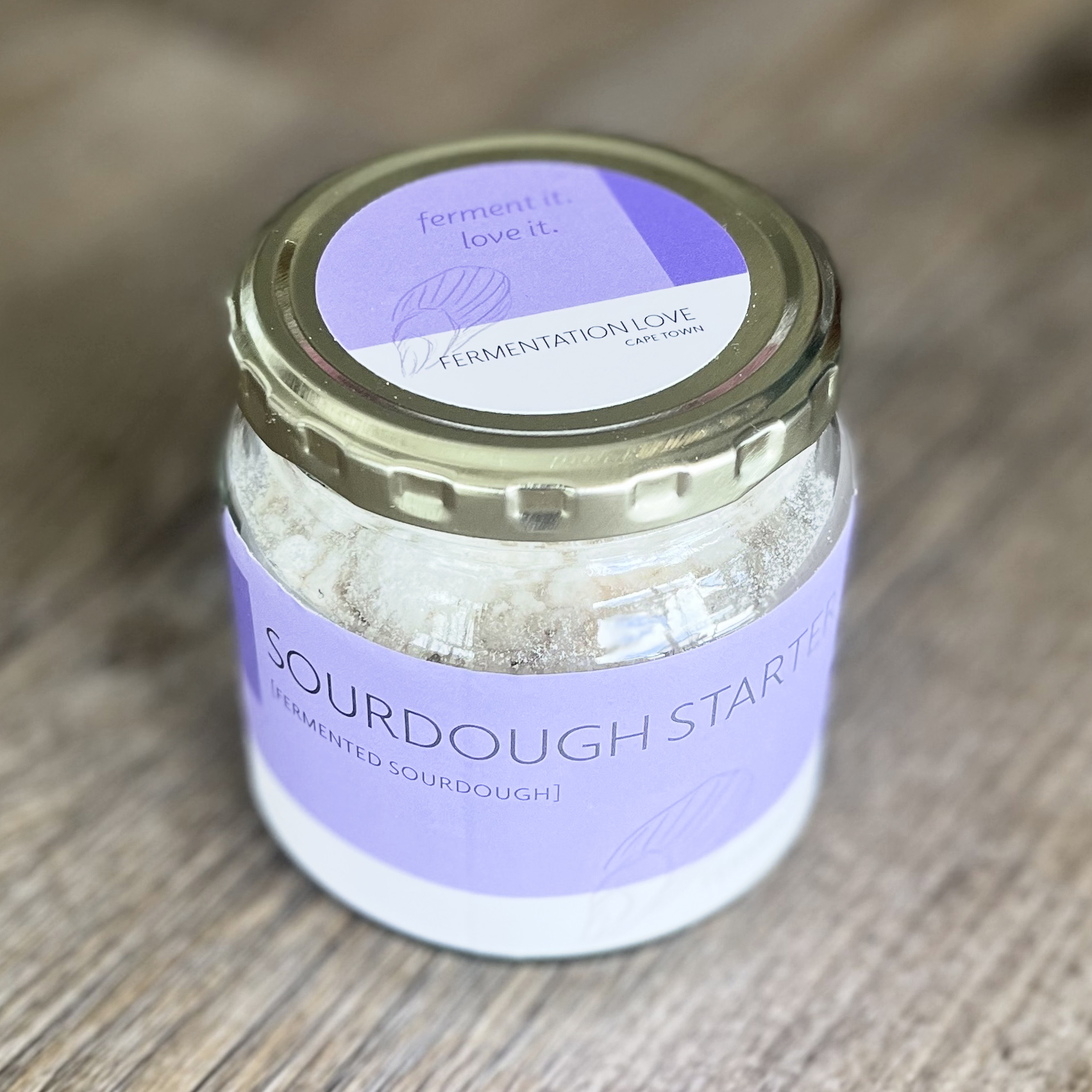
Your Fermentation Love starter arrives established, so you are waking and feeding it rather than building one from scratch. That saves the fragile first fortnight most beginners struggle with.
02
Wake, feed, observe
Use a whole grain or organic flour type for best results. A digital kitchen scale makes repeatable feeds much easier. Clean tools and fresh water give the culture a steady start.
Our sourdough starter is delivered in a crumbly dry state to keep the starter from losing strength while travelling. For a first reactivation you can simply add lukewarm water and stir until no more flour clumps are left.
Ingredients:
1–2 Tbsp sourdough starter
100ml lukewarm water
100g whole grain or organic flour
- 01Place the recommended amount of starter in a clean, non-reactive jar.
- 02Add the measured water and flour, then mix until no dry pockets remain.
- 03Cover loosely, mark the starting level (for example with a rubber band) and keep at a steady room temperature.
- 04Watch for bubbles, expansion and a rounded or just-flattening top. Note how long it takes to peak.
- 05Bake when the starter rises predictably after feeding; keep a small portion back (1 Tbsp is sufficient) and feed it again.
03
Counter or fridge?
A starter used most days can live at room temperature with regular feeds. If you bake less often, refrigeration slows it down. The drier you keep your sourdough starter (less water in ratio to fed flour), the longer you can keep it in the fridge before it loses strength.
After a fridge rest, give the starter enough room-temperature feeds to rise reliably before relying on it for a loaf. A missed peak is not failure — it is information for the next feed.
04
From starter to first loaf
Bake when the starter is at or just past its peak, not when it has collapsed and gone sharply sour. A long, slow rise develops more flavour than a rushed one, and a cool overnight proof in the fridge suits most home schedules.
The portion you remove before feeding is not waste. Use it in crackers, pancakes or flatbreads — the same thinking behind our own sourdough crackers and pasta.
What the research records
Recorded benefits
Fermented foods are studied, and some effects are well recorded while others are still early or inconsistent. Nothing here is a treatment or a promise, and none of it replaces advice from a qualified health professional.
- Longer fermentation changes the dough
- Slow fermentation by wild yeast and lactic acid bacteria is recorded to break down some starches and proteins in the flour before baking, which is what gives sourdough its flavour and open crumb.
- Often gentler to digest
- Many people report that a properly fermented long-rise sourdough sits more comfortably than fast-risen bread. Evidence is promising but not conclusive, and it varies by flour and method.
- More available minerals
- Fermentation reduces some phytic acid in the flour, which studies link to better availability of minerals such as iron, zinc and magnesium.
- What it is not
- Sourdough is not gluten-free and is not safe for coeliac disease or a wheat allergy. Blood-sugar and digestion findings are modest and depend heavily on flour, hydration and fermentation time — treat it as good bread, not medicine.
Read the culture
What to notice
Usually normal
- — Bubbles throughout the mixture
- — A clean tangy, fruity or yeasty aroma
- — A predictable rise followed by a gentle fall
- — A greyish liquid on a hungry, neglected starter
Stop and discard
- — Fuzzy mould or pink, orange or red discoloration
- — A rotten or putrid smell
- — Contamination by broken glass, pests or unknown material
Further reading
This guide is educational, not medical advice. It draws on public food-safety and university extension guidance:
Ready when you are