


Guide 01
Water kefir for beginners
A light, lively ferment made with sugar water — friendly to curious first-timers and easy to make part of a weekly rhythm.
[Water kefir grains | Sugar water | Time]
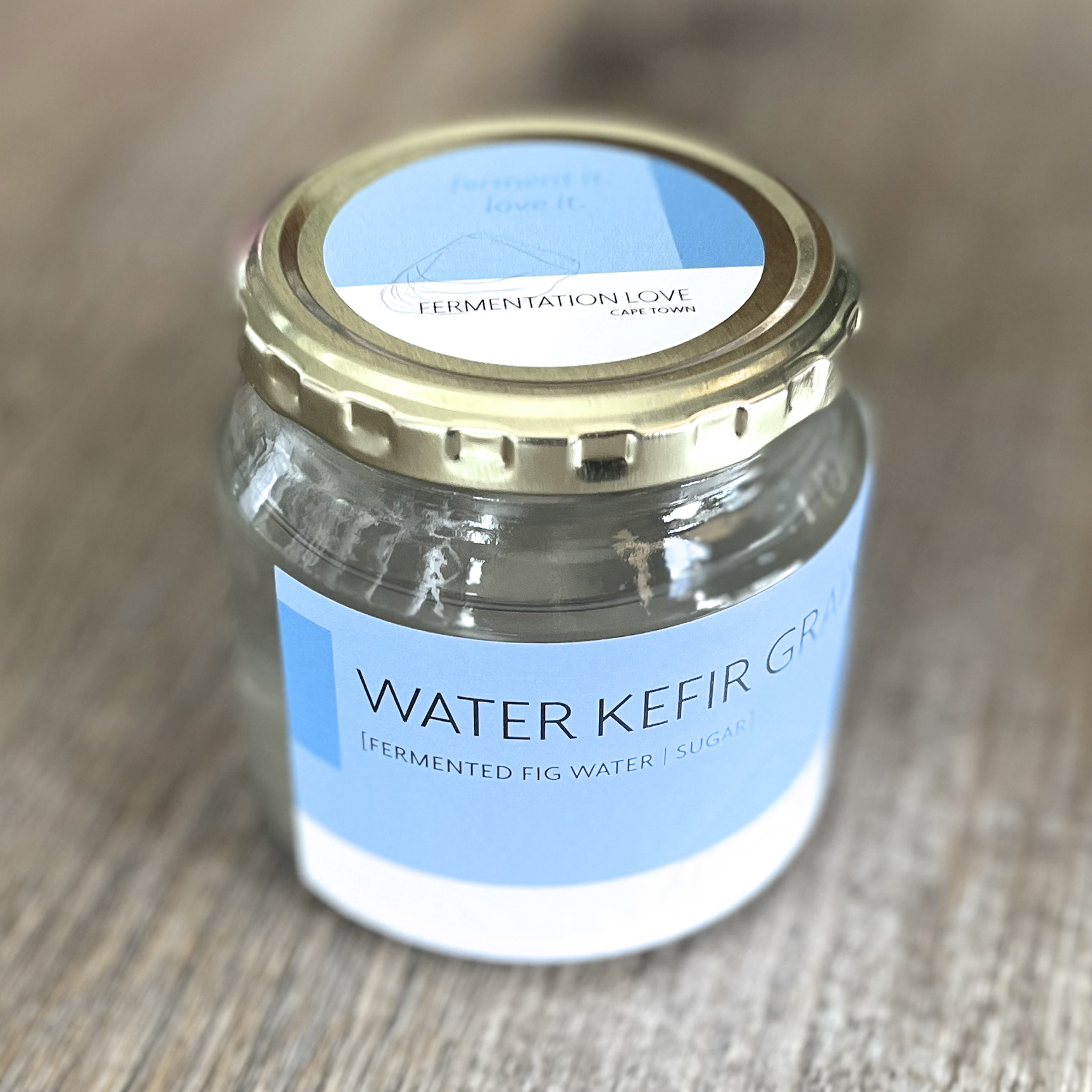
01
What is water kefir?
Water kefir grains are a living community of bacteria and yeast held in small, translucent clusters. Given sugar water, they ferment a gently tart drink that may develop a little natural sparkle.
The grains are reusable and, well cared for, they keep growing. Each batch feeds on the sugar you supply, which is why a finished water kefir tastes far less sweet than the liquid you started with.
The drink is dairy-free and suits people avoiding milk. It remains a fermented food rather than a treatment or cure. Start with a small serving if fermented drinks are new to you.
02
Your simple first batch
Use the following quantities and feeding rhythm. Clean tools, fully dissolved sugar and water give the culture a steady start.
Ingredients:
1 Tbsp water kefir grains
750 ml mineral water
60 g sugar
optional: 30 g dried fruits and juice of 1/2 lemon
- 01Take a clean glass jar and dissolve the measured sugar in water (water at room temperature). Optionally add the dried fruits and lemon juice.
- 02Add the water kefir grains and stir gently. Cover with a clean breathable cloth secured at the rim.
- 03Leave at a comfortable room temperature, out of direct sun. Begin checking after about 24 hours. The first fermentation will take 1-3 days depending on the room temperature and your taste preferences.
- 04Strain the drink into a clean bottle and place the grains straight into fresh sugar water.
- 05Refrigerate the finished water kefir. Optional flavouring and extra fizz belong in a separate second ferment at room temperature.
03
The second ferment
A second ferment is optional and purely about flavour and fizz. Strain the finished kefir away from the grains, add a little fruit, juice or ginger, and seal it in a pressure-safe bottle for a short spell at room temperature.
Sealed bottles build pressure quickly, especially in a warm kitchen. Chill before opening, open slowly over a sink and point the bottle away from faces. If you prefer no fizz at all, skip this step and refrigerate straight after straining.
04
Care without fuss
Temperature changes the pace. A warm Cape Town kitchen often ferments faster than a cool winter room, so taste and observe rather than following the clock alone.
If you pause, keep the grains submerged in fresh sugar water in the fridge and follow the packed care guide for waking them again. Grains that have rested need a few regular feeds before they find their old rhythm.
Avoid metal that reacts, such as bare aluminium or copper. Glass jars, plastic or stainless steel strainers and clean hands are all you need.
What the research records
Recorded benefits
Fermented foods are studied, and some effects are well recorded while others are still early or inconsistent. Nothing here is a treatment or a promise, and none of it replaces advice from a qualified health professional.
- A source of live microbes
- Water kefir is a fermented food containing live bacteria and yeast. Reviews of fermented foods record that these microbes reach the gut, though how long they stay and what they do varies from person to person.
- Dairy-free and low in sugar by the end
- Because the culture consumes much of the added sugar, a finished batch is markedly less sweet than the starting liquid. For people avoiding dairy, it offers a fermented drink without milk.
- A gentler swap for soft drinks
- Lightly sparkling and tart, it is often used in place of sweetened fizzy drinks. That substitution, rather than any special property, is the practical everyday benefit.
- What is still uncertain
- Human studies on water kefir specifically are limited and much of the research is laboratory or animal work. Claims about detoxing, immunity or weight loss are not supported. Fermented drinks may not suit everyone, including people who are immunocompromised or pregnant — ask a health professional first.
Read the culture
What to notice
Usually normal
- — A clean, lightly yeasty or tangy aroma
- — A little cloudiness or gentle fizz
- — Grains that look translucent and irregular
- — A drink that becomes less sweet over time
Stop and discard
- — Fuzzy mould or pink, orange, green or black growth
- — A rotten, putrid or sharply unpleasant smell
- — A damaged jar or unexplained contamination
Further reading
This guide is educational, not medical advice. It draws on public food-safety and university extension guidance:
Ready when you are